
MapQuest Printouts
Turn left in 0.3 miles… if you can read your crumpled paper in time.
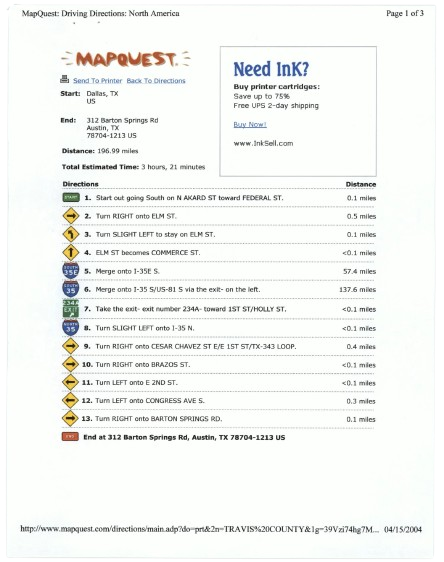
Before your phone calmly rerouted your bad decisions, navigation involved a home printer, a stack of paper, and a passenger suddenly promoted to emergency navigator. MapQuest printouts turned the internet into a travel assistant, right up until one missed turn transformed that helpful sheet into a crumpled artifact of false confidence.
Launched in 1996, MapQuest made online directions feel futuristic as hell. You typed in an address, printed the turn-by-turns, and hit the road with the quiet faith that nobody would spill coffee on page one or say, "Wait, I think that was our exit" two seconds too late.
Quick Bits
What It Was
MapQuest printouts were turn-by-turn directions you got from the internet and then physically folded into a glove-box gremlin. They turned online navigation into something you could highlight, crumple, and desperately squint at from the passenger seat.
Why It Mattered
They gave ordinary drivers a way to plan trips with more confidence before real-time GPS started bossing everyone around. For a while, printing directions from the internet felt wildly futuristic and a lot better than vibes.
Why They Became Obsolete
Static directions fall apart the second you miss an exit, hit traffic, or let your passenger say, "Wait, was that our turn?"
They still feel iconic because they capture that awkward bridge era between giant paper maps and a phone calmly rerouting your mistakes.
Why They Still Feel So Familiar
MapQuest printouts belong to a transitional moment when the internet could help you navigate, but it still could not travel with you in real time. You got the smarts at home and the panic in the car.
That split is exactly why people remember them so vividly. They were modern enough to feel exciting and primitive enough to betray you immediately.
Archive Note
Each archive page is an original editorial summary built to give quick historical context, why the tech mattered, and why it fell out of the spotlight. The tone is intentionally cheeky, but the goal is still to be clear, useful, and grounded in the real product story.
This is not an academic paper, collector price guide, or exhaustive spec sheet. It is a concise archive entry meant to make old tech legible, memorable, and easy to browse without sanding off all the personality.
If you spot something off or want to nominate a better forgotten gadget for the archive, head over to the contact page and say so.
More From This Lane
A few neighboring relics chosen by lane, era, and how they got replaced.