
PalmPilot
The smartphone’s nerdy ancestor. Stylus-powered, suit-approved, and completely revolutionary — for a minute.
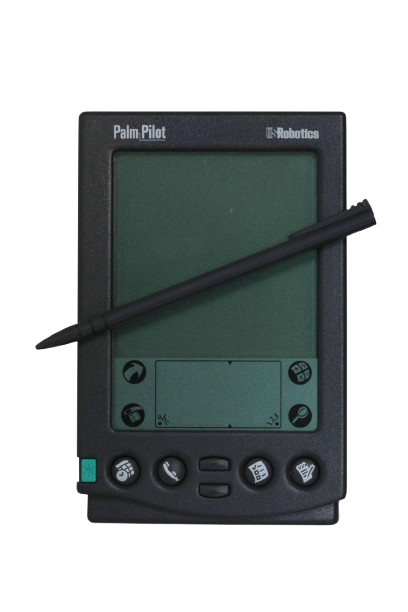
PalmPilots were your pocket brain in the late 90s. You wrote in Graffiti (a stylus-only alphabet), tapped through your calendar, and felt like a digital wizard in a sea of paper planners.
Debuting in 1996, Palm’s little PDA ran simple apps for contacts, notes, and tasks — all without a keyboard. Business folks loved it. Techies loved it. But then phones got smarter and PalmPilots became the digital dinosaur we still remember fondly.
Quick Bits
What It Was
The PalmPilot was a pocket-sized digital brain for people who were done pretending paper planners were enough. It was fast, focused, and surprisingly elegant compared with the clunky handheld bricks hanging around at the time.
Why It Mattered
Palm proved that pocket computing could be useful instead of just nerd bait. Fast syncing, good battery life, and a clear job description made it feel like an actual daily tool instead of a pocket-sized science fair project.
Why It Faded
Once phones started swallowing calendars, contacts, email, and web access whole, carrying a separate PDA got harder to defend.
Still, the PalmPilot quietly laid down a ton of interface ideas that modern phones and tablets now act like they invented.
Design Legacy
Palm got the basics right in a way many early handheld rivals did not: quick launch times, focused apps, strong battery life, and an interface that respected the fact that people were busy.
That mix of portability, sync, and glanceable information helped define what people eventually expected from smartphones, even after the dedicated PDA itself was sent to pasture.
Archive Note
Each archive page is an original editorial summary built to give quick historical context, why the tech mattered, and why it fell out of the spotlight. The tone is intentionally cheeky, but the goal is still to be clear, useful, and grounded in the real product story.
This is not an academic paper, collector price guide, or exhaustive spec sheet. It is a concise archive entry meant to make old tech legible, memorable, and easy to browse without sanding off all the personality.
If you spot something off or want to nominate a better forgotten gadget for the archive, head over to the contact page and say so.
Sources And Further Reading
Selected links used to ground the historical timeline, format details, or product context.
More From This Lane
A few neighboring relics chosen by lane, era, and how they got replaced.