
CRT Monitor
Built like a tank, glowed like a beacon. Your first screen probably weighed more than your whole PC now.
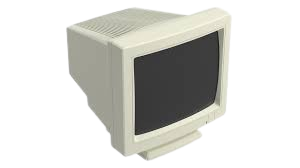
The CRT monitor didn’t just display — it dominated. These bulky beasts warmed your room, zapped your fingers, and delivered hours of pixelated glory.
Mainstream from the 80s through the early 2000s, CRTs gave us our first gaming wins, MS Paint masterpieces, and shaky webcam chats. LCDs may be sleeker, but CRTs were *loud* in every way.
Quick Bits
What It Was
CRT monitors used cathode ray tubes to blast images onto glass, which sounds dramatic because it was. In practice that meant giant screens, enormous backsides, lots of heat, and the exact look of early home computing.
Why It Mattered
For years, CRTs were just the screen. They handled motion well, worked across weird resolutions, and gave games and desktop graphics a chunky glow that retro fans still chase like a sacred artifact.
Why They Were Replaced
They were heavy, power-hungry, and had the spatial footprint of a microwave with opinions.
Once flat panels got good enough, people happily traded tube charm for thin screens, lighter desks, and fewer accidental hernias.
Why Retro Fans Still Want One
CRTs still have a cult because old games, consoles, and video signals often look more natural on the displays they were originally designed around.
What used to be a drawback now reads as texture: scanlines, glow, and instant response turned from everyday reality into a nostalgia flex.
Archive Note
Each archive page is an original editorial summary built to give quick historical context, why the tech mattered, and why it fell out of the spotlight. The tone is intentionally cheeky, but the goal is still to be clear, useful, and grounded in the real product story.
This is not an academic paper, collector price guide, or exhaustive spec sheet. It is a concise archive entry meant to make old tech legible, memorable, and easy to browse without sanding off all the personality.
If you spot something off or want to nominate a better forgotten gadget for the archive, head over to the contact page and say so.
Sources And Further Reading
Selected links used to ground the historical timeline, format details, or product context.
More From This Lane
A few neighboring relics chosen by lane, era, and how they got replaced.